Key Data on Health and Health Care For American Indian or Alaska Native People

A recent Kaiser Family Foundation (KFF) data brief highlights important disparities in health coverage, access, and outcomes for American Indian and Alaska Native (AIAN) people, drawing on national datasets such as the American Community Survey, BRFSS, and CDC WONDER.

Read more
Federal Update: HHS & HUD "Make Petersburg Healthy Again" Initiative (Petersburg, VA)

On January 9, 2026, the U.S. Department of Health and Human Services (HHS) announced a partnership with the U.S. Department of Housing and Urban Development (HUD), the Commonwealth of Virginia, and the City of Petersburg to launch “Make Petersburg Healthy Again,” an initiative aimed at improving health outcomes in a medically underserved community.

Read more
Critical AI Health Literac as Liberation Technology: A New Skill for Patient Empowerment

A commentary from the National Academy of Medicine (NAM) Perspectives discusses how artificial intelligence is increasingly used in health care by both institutions (e.g., clinical workflow tools) and by patients and care partners (often through generative AI).

Read more
Vaccines and "Off-Target" Findings in Older Adults

A KFF (Kaiser Family Foundation) Health News article published January 14, 2026, summarizes research examining potential “off target” outcomes associated with vaccines in older adults (effects beyond preventing the targeted infection).

Read more
Strengthening Policy and Advocacy Capacity in The Public Health Workforce

A recent article published in Health Affairs Scholar discusses gaps in policy and advocacy capacity across the public health workforce and the implications for effective public health governance.

Read more
CDC Adopts Individual-Based Decision-Making for Infant Hepatitis B Immunization

In December 2025, the Centers for Disease Control and Prevention (CDC) adopted new guidance that supports individual-based decision-making for hepatitis B vaccination for infants born to women who test negative for the hepatitis B virus.

Read more
Key Data on Health & Health Care by Race and Ethnicity

A recent Kaiser Family Foundation (KFF) report provides a detailed analysis of health and health care disparities across racial and ethnic groups in the United States.

Read more
A Healthier Future for All

The U.S. Department of Health and Human Services (HHS) Office of Minority Health published a blogpost titled “A Healthier Future for All” that outlines practical steps individuals, families, and communities can take to support whole-person health and chronic disease prevention

Read more
CDC PLACES—LOCAL HEALTH DATA

CDC’s PLACES (Population Level Analysis and Community Estimates)is a public data tool that helps users look up health and health-related measures for specific communities across the United States.

Read more
AMA Adopts New Public Health Policies to Improve Health Nationwide

The American Medical Association (AMA) has announced the adoption of several new public health policies aimed at strengthening health outcomes, supporting prevention efforts, and addressing emerging health challenges across the country. These policies, approved during the AMA’s 2025 Interim Meeting, reflect the organization’s ongoing commitment to advancing evidence-based public health strategies and improving health for diverse communities.

Read more
House Appropriations Committee Advances FY 2026 Labor HHS Education Funding Bill

The U.S. House Committee on Appropriations has approved the Fiscal Year 2026 Labor, Health and Human Services, Education, and Related Agencies (LHHS) appropriations bill.

Read more
Federal Update: Department of Education Student Loan Rulemaking

The U.S. Department of Education recently released updates from its ongoing student loan rulemaking process. These proposed changes outline new borrowing limits and repayment rules for graduate and professional students, including individuals pursuing degrees in fields such as public health (MPH), social work, public administration, nursing, and other health related disciplines.

Read more
To Protect Democracy, We Must Protect Public Health Data

A recent blog post from the Robert Wood Johnson Foundation discusses that protecting public health data is essential not just for health outcomes, but for preserving democratic accountability and trust.

Read more
Race, Rates, and Energy Insecurity

Policies for Action recently published an analysis examining racial disparities in electricity costs and energy consumption across U.S. utility service areas. The article highlights how households in predominantly Black and Hispanic communities often face higher energy burdens, meaning a larger share of income goes toward electricity expenses.

Read more
Advancing Equity and Innovation: Arie's Next Chapter at The Idea Institute

The Association of Schools and Programs of Public Health (ASPPH) announced an important milestone in its work to strengthen equity, innovation, and academic excellence in public health. ASPPH has expanded the IDEA Institute—its hub for Innovation, Discovery, and Excellence in Academia—and introduced the next phase of ARIE, an AI-powered resource designed to support institutions, faculty, learners, and public health professionals.

Read more
Partners for Advancing Health Equity (P4HE): Health Equity Resource Library

Partners for Advancing Health Equity (P4HE) has released an expanded Health Equity Resource Library, a national collection of research briefs, practice tools, policy summaries, case studies, webinars, and cross-sector project highlights focused on advancing equitable health outcomes.

Read more
Strategies to Address Health Misinformation in Marginalized Communities: New Findings from the International Journal for Equity in Health

A recent article published in the International Journal for Equity in Health examines effective approaches for addressing health misinformation in marginalized and underserved communities.

Read more
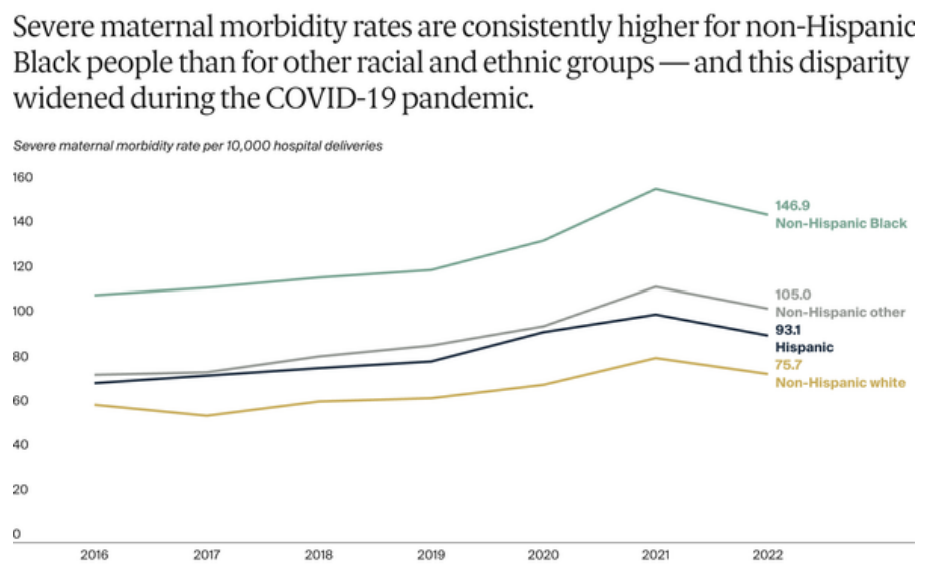
Reimagining Birth, Restoring Trust

A recent podcast episode from The Commonwealth Fund titled “Reimagining Birth, Restoring Trust” explores solutions for improving maternal-care experiences and outcomes in the United States.

Read more